
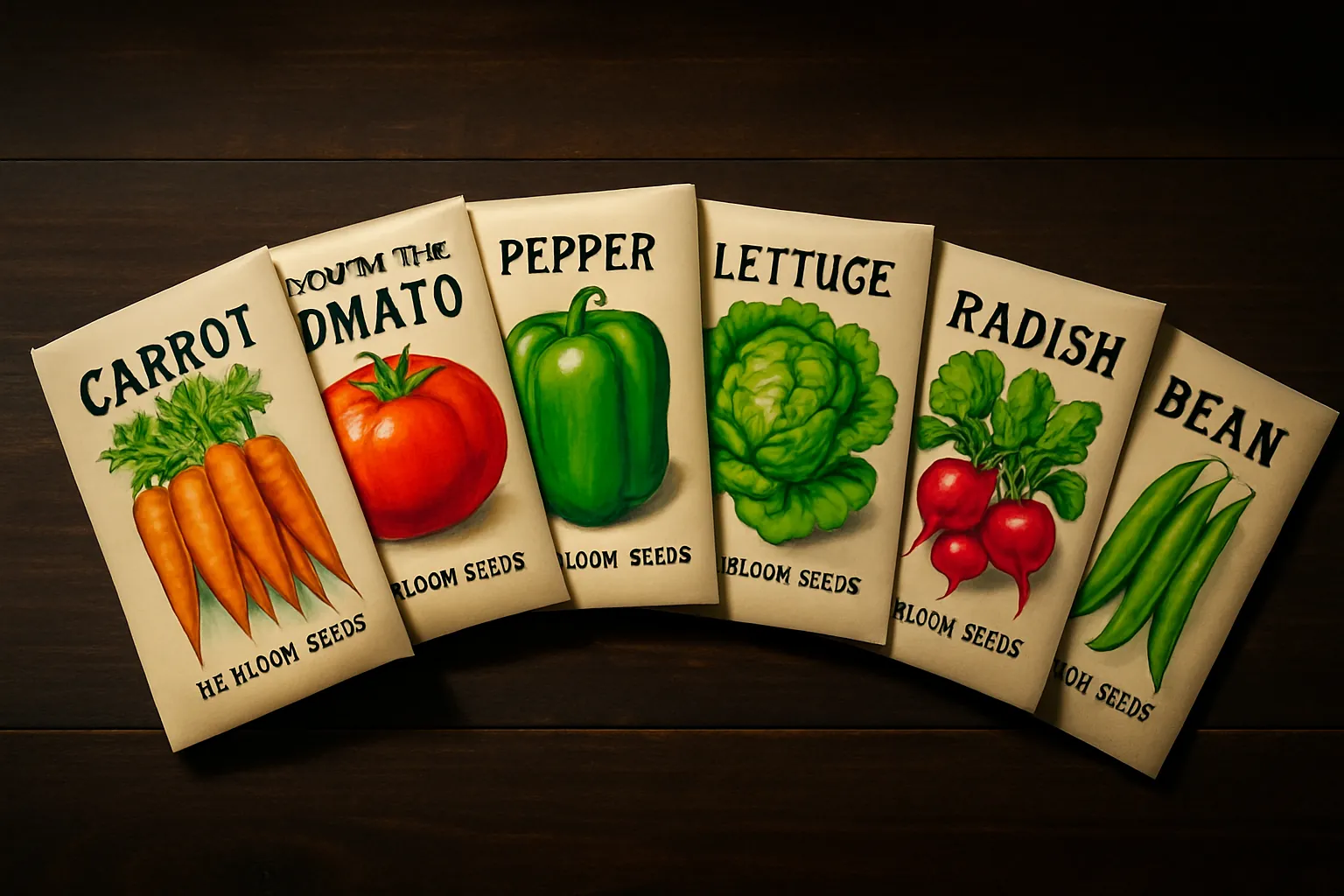
TOP COVERAGE NEWS — MAR. 14, 2025 — A cluster of small-town libraries has quietly opened the doors to what many insiders are calling the most consequential food-security effort of the year. Seed drawers, hardly bigger than the average recipe box, now sit beneath fluorescent lights in Spillville, Bonners Ferry, Tunkhannock, and Thermopolis. The initiative sounds humble: borrow a packet of tomato or dill, grow it, and return fresh seeds in the fall. Yet local officials, gardeners, and emergency-management planners agree on one point: these seed libraries may redraw the survival map of entire counties if food supply lines falter.
Roots in an Unsettled Season
March sunlight still feels thin in the Upper Midwest, but the worry growing in town halls is thick. Wyoming County planner Nora Gaines says the region sits on a “knife-edge between long hauling routes and fragile grocery inventories.” A single storm or diesel shortage could empty store shelves in 36 hours. “If families hold viable seeds at home, our margin of resilience doubles overnight,” she tells Top Coverage News.
That urgency explains why a normally quiet workshop in Spillville drew standing-room-only crowds. Children clutched Dixie cups of potting mix; veterans of last year’s drought compared germination logs. Organizers framed seed saving not as a hobby but as a civic duty. “Every kernel you return strengthens the commons,” lead volunteer Jen Richter declared from the podium, her voice echoing like a budget-vote rally.
Similar language surfaced in Boundary County, Idaho. There, lifelong gardener Jody McClintock converted an idle card catalog into a vault of 3,000 open-pollinated varieties. The result, according to library board minutes reviewed by Top Coverage News, was nothing short of a “community sovereignty asset.”
Blueprints for a Hyper-Local Supply Chain
Behind the scenes, librarians have adopted protocols that would impress any logistics professional. Each seed packet carries a QR code linking to a shared database that tracks borrowing dates, germination success, and return volume. The data help coordinators spot gaps in real time — for example, a shortage of cold-hardy greens that could jeopardize early-spring nutrition.
Three best-practice tips now circulate state-wide:
- Label for Longevity: Note variety, harvest date, and ideal storage temp on every packet to curb loss.
- Practice the “30-Percent Rule”: Keep at least 30 % of each harvest for re-deposit, securing next year’s stock.
- Rotate Leadership: A new volunteer coordinator each quarter spreads knowledge and prevents burnout.
Experts at the MI Seed Library Network confirm these tactics mirror guidelines used in statewide repositories. “It is remarkable to see rural branches adopting procedures once limited to university labs,” says network adviser Laura Nance.
The stakes rise further when you consider crop diversity. Seed libraries favor heirloom and open-pollinated strains, which maintain genetic traits lost in uniform commercial hybrids. That diversity acts like an insurance policy against sudden blight or unpredictable weather swings — threats that climatologists predict will intensify over the next decade.
Voices From the Frontlines of the Garden Row
Residents feel the pressure in personal ways. “I waited 11 months for a grocery delivery after the highway mudslide,” recalls Boundary County school bus driver Hank Lentz. “This time I’m putting my hope in Cherokee Purple tomatoes, not a semi-truck.”
Even first-time growers sound battle-ready. Fifth-grader Aliyah Barnes practiced sowing lettuce in egg cartons at the Tunkhannock Public Library demo. When asked why, she did not mention science homework. “If the big stores close,” she said, “my family still eats.” Her words drew murmurs of agreement from parents lining the back wall.
These sentiments echo national warnings. The nonprofit Bay Area Seed Interchange Library — considered the birthplace of the modern movement — has long argued that seed access is a frontline defense against food-system shocks. Academic reviews published by James Madison University’s Community Seed Library draw a direct line between household seed stores and regional nutrition scores, especially for lower-income areas.
“The ripple effects exceed calories,” stresses sociologist Dr. Manuel Ortiz. “Community seed exchanges rebuild trust, spur intergenerational teaching, and anchor people to place. Those are stabilizers during any crisis.”

From Drawer to Doctrine: Policy Catching Up
Local governance is now scrambling to codify what began as informal swapping. On Tuesday night, the Hot Springs County Library Board voted 5-2 to recognize its seed drawers as a “living collection,” granting them protection equal to rare books. The motion enables the branch to tap disaster-relief grants earmarked for cultural artifacts, effectively earmarking funding for humidity control, fireproof cabinets, and staff training.
The legal momentum matters. In 2014, the Pennsylvania Department of Agriculture briefly considered regulating seed libraries under commercial seed-seller laws, citing labeling concerns. Librarians across the state mobilized, successfully carving out an exemption. Tunkhannock’s branch, seasoned by that battle, now trains peers in how to draft compliant bylaws before regulators come knocking again.
County Extension offices are also stepping in. Rachel Miller of the Red Dirt Master Gardeners warns that without formal agreements, seed stocks can be wiped out by a single well-meaning user who fails to return viable seeds. Her workshop in Thermopolis emphasized chain-of-custody logs more commonly seen in forensic labs. “Documentation prevents collapse,” she advised attendees, flipping through waterproof binders.
The High-Pressure Horizon
While enthusiasm surges, librarians confront limits. Climate-controlled storage costs thousands, and volunteer burnout looms large. Still, the prospect of local self-reliance keeps them pushing. “Each envelope is a line of defense,” says Spillville branch director Ellen Gao. She estimates that if every household in Winneshiek County planted just 20 square feet of vegetables, the county could offset 12 % of its annual produce imports. That calculation, she notes, “buys us breathing room during supply chain stress.”
Supply-chain analysts back her up. A 2023 study by the Midwest Food Resilience Collective found that a 10 % rise in backyard production trimmed grocery-store run-outs by 18 % during pandemic shortages. Seed libraries, the authors concluded, are the catalyst that makes such home production possible at scale.
“Do not underestimate a borrowed bean,” warns Dr. Ortiz. “It might fuel the next phase of grassroots resilience.”
How to Engage Before the Shelves Go Bare
Area residents can step in today. Here is a concise action plan:
- Check Out Seeds: Visit your nearest participating library and register for at least one packet of a staple crop.
- Log Growth Data: Keep a simple notebook of planting dates and outcomes. Libraries aggregate these figures to forecast future demand.
- Return & Repeat: Dry, label, and bring back a portion of harvest seeds within 60 days of collection. This feedback loop keeps the “living collection” alive.
Citizens who cannot garden can still aid the mission by donating seed-saving envelopes, mason jars, or even a few hours of cataloging time. Every layer of participation, coordinators say, erects another buffer against uncertainty.
With global supply chains showing fresh signs of strain, community seed libraries no longer read as quaint experiments. They appear instead as strategic strongholds — modest in footprint yet mighty in consequence. In whispered conversations at garden counters and echoed calls at public hearings, one truth seeds itself: the future of local food may hinge on what fits inside a three-inch packet.