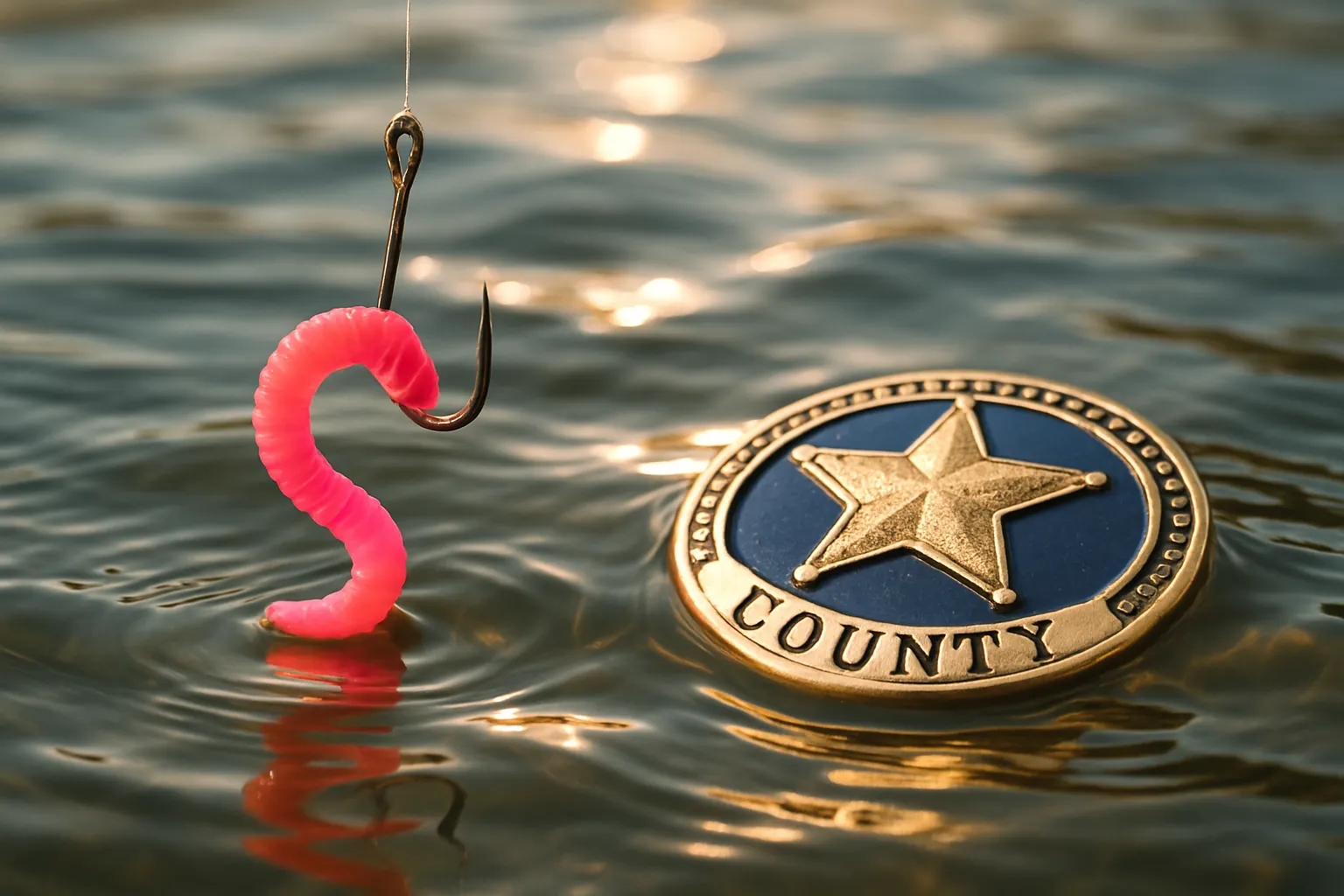

When Essex County officials quietly posted a notice about reviving their free Youth Fishing Derbies, no one anticipated the tremor of consequences that would follow. Within 24 hours, registration lists swelled, bait shops ran low on nightcrawlers, and an emergency town-hall livestream drew more viewers than last month’s gubernatorial debate. Parents, policy hawks, and legacy anglers suddenly found themselves aligned—or diametrically opposed—over an event that, on the surface, is little more than children dangling lines into modest park ponds. Yet in this hyper-connected civic moment, every bobber is a ballot, every carp a contested constituency, and every trophy a referendum on how we cultivate community. The county’s Parks, Recreation, and Cultural Affairs director, Valentina Torres, declared, “A fishing pole in a child’s hand is a tool of democracy,” moments before the county clerk began drafting new crowd-management protocols. Welcome to the derby season that may rewrite Essex County’s social contract.
Hooks, Lines, and Civic Narratives
The first ripple surfaced when the schedule—seven derbies in seven different parks—mirrored the county’s district map with suspicious precision. Long-time civic watchdogs interpreted the pattern as a deliberate attempt to equalize youth engagement across socioeconomic lines. “Casting rods are the new voting booths,” argued Professor Eli Navarro, a political sociologist at Seton Hall University. Navarro points to data showing that participation in recreational events often predicts future volunteerism and voter turnout. That notion caught fire on local message boards, where some applauded the county’s strategy while others cried social engineering.
“We are literally baiting the next generation of voters,” Navarro told Patch.com.
Within 48 hours, the Essex County Youth Civic Corps announced a companion initiative: real-time civics pop-ups at each derby, featuring mock ballots asking kids to choose between catch-and-release or catch-and-keep policies. Critics accused organizers of politicizing a pastime, but attendance projections jumped 40 percent overnight. Meanwhile, volunteer judges scrambled to coordinate clipboards and calipers for measuring fish. County Comptroller Reymond Hsu confirmed that overtime budgets for park rangers were “stretched to tensile limits,” likening the logistical crunch to election night tabulation.
At the heart of the furor lies the derby’s ruleset: children under 15 only, bring your own tackle, prizes for first and most fish. Prizes sound benign—yet local merchants now vie for sponsorship slots, and chambers of commerce whisper that winning lures stamped with store logos could swing consumer loyalty for years to come. What began as friendly competition has metastasized into a commercial, cultural, and political nexus, turning Weequahic Lake and its sister ponds into pivotal arenas of soft power.
Regulatory Reverberations and Budgetary Ripples
On the administrative front, the derbies have detonated a bureaucratic chain reaction. The county’s Environmental Compliance Board issued a provisional waiver permitting amplified sound at shoreline locations, a move that set wildlife advocates on edge. Audubon Society chapters mobilized, warning that sudden surges of human activity could spook migratory birds. In a pre-dawn press conference, ranger supervisor Malik Jefferson stood flanked by laminated maps of osprey nesting zones.
“If we can keep Fourth of July fireworks out of these wetlands, we can keep derby chaos contained,” Jefferson asserted, citing guidance from the U.S. Fish and Wildlife Service.
Financially, the numbers are startling. Preliminary estimates peg direct county outlays at $82,000—portable restrooms, insurance riders, and emergency medical technicians on standby. That figure excludes indirect costs like shoreline reinforcement after scores of excited kids unintentionally erode embankments. County freeholders will vote next week on a contingency fund, prompting fiscal-conservative columnist Dana Fierro to write in Bluffton Today that “each worm dunked in Verona Park may now carry a $12 surcharge for taxpayers.”
Meanwhile, bait suppliers sense gold in these muddy waters. Jersey Tackle Co. doubled its bulk-worm order and rented refrigerated trailers to keep them viable. CEO Manny Patel dubbed the derbies a “bait-onomic stimulus,” projecting a 200 percent sales spike. Parent groups pushed back, accusing vendors of price-gouging after nightcrawler bundles leaped from $4 to $7.95. Patel countered that shipping costs and demand dictated the uptick. The county attorney’s office has convened a task force to determine whether temporary price caps violate free-enterprise principles. Even Newark’s municipal bond rating got a mention in analysts’ notes, cautioning that unexpected recreation liabilities could nudge debt ratios upward—proof that every reel-in reverberates through the ledger.
Legacy Casting: The Future Leaders Reeling In
Beyond dollars and ordinances lies a deeper question: Who inherits the narrative of public space stewardship? Community elders recall the derbies of the 1980s, where a single golden trophy sat in a folding chair at day’s end. Today, 3D-printed medals, augmented-reality leaderboards, and live social-media dashboards dominate the scene. County Executive Joe DiVincenzo insists the modernization isn’t mere spectacle but “an apprenticeship in communal responsibility.”
“A child who respects catch-limits today will respect city ordinances tomorrow,” DiVincenzo declared during a webinar that drew 2,000 live viewers.
Still, some worry about algorithmic inequality. Data scientist Roya Al-Masri found that children in Wi-Fi-rich neighborhoods logged catches to the leaderboard 30 percent faster, gaining visibility—and thus sponsorship prospects—from outdoor brands eager to anoint junior ambassadors. Her solution: portable hotspot kiosks at each lake so no angler is left offline. The county has green-lit a pilot, sparking fresh debate over tech-equity budgets.
Amid the frenzy, ten-year-old prodigy Jamarcus “J-Hook” Bennett remains blissfully unfazed. Interviewed while practicing casts at Verona Park, he shrugged: “I just like the splash.” Yet even J-Hook’s simplicity is political ammo. Advocacy group Youth First NJ plastered his quote on posters reading “Splash Today, Lead Tomorrow,” framing him as the emblem of next-gen civic agency.
As June approaches, Essex County braces for what many now call “The Carp Caucus.” If history is any guide, prizes will be awarded, cheeks will be sunburned, and—yes—carp will be conscripted. But the larger takeaway may be that in 2025, a child’s fishing derby can rattle supply chains, budgets, and ideological bedrock with the flick of a wrist. And when the final fish flops into a bucket, the debate over who truly reeled in whom will echo far longer than the ripples on Branch Brook Lake.