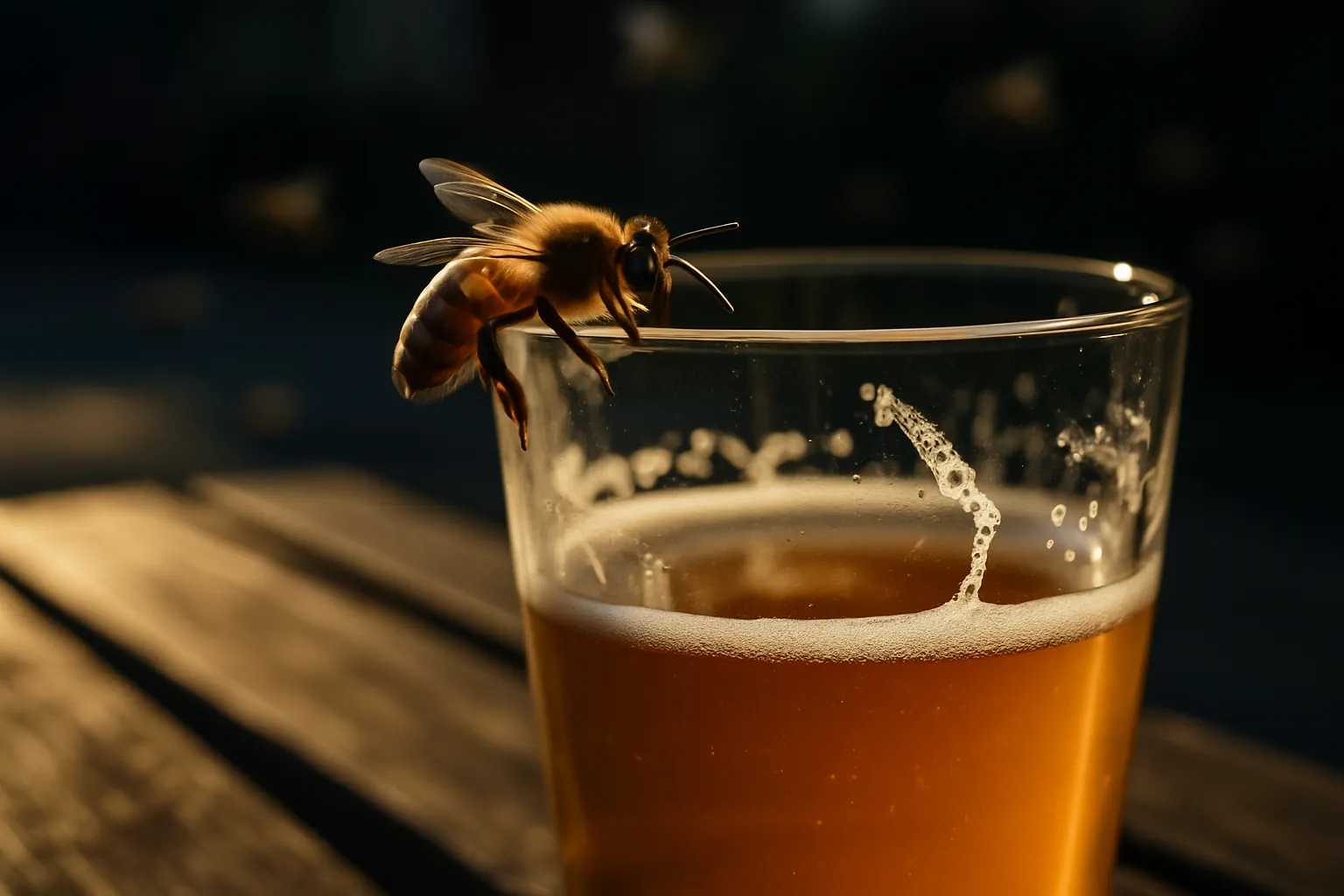
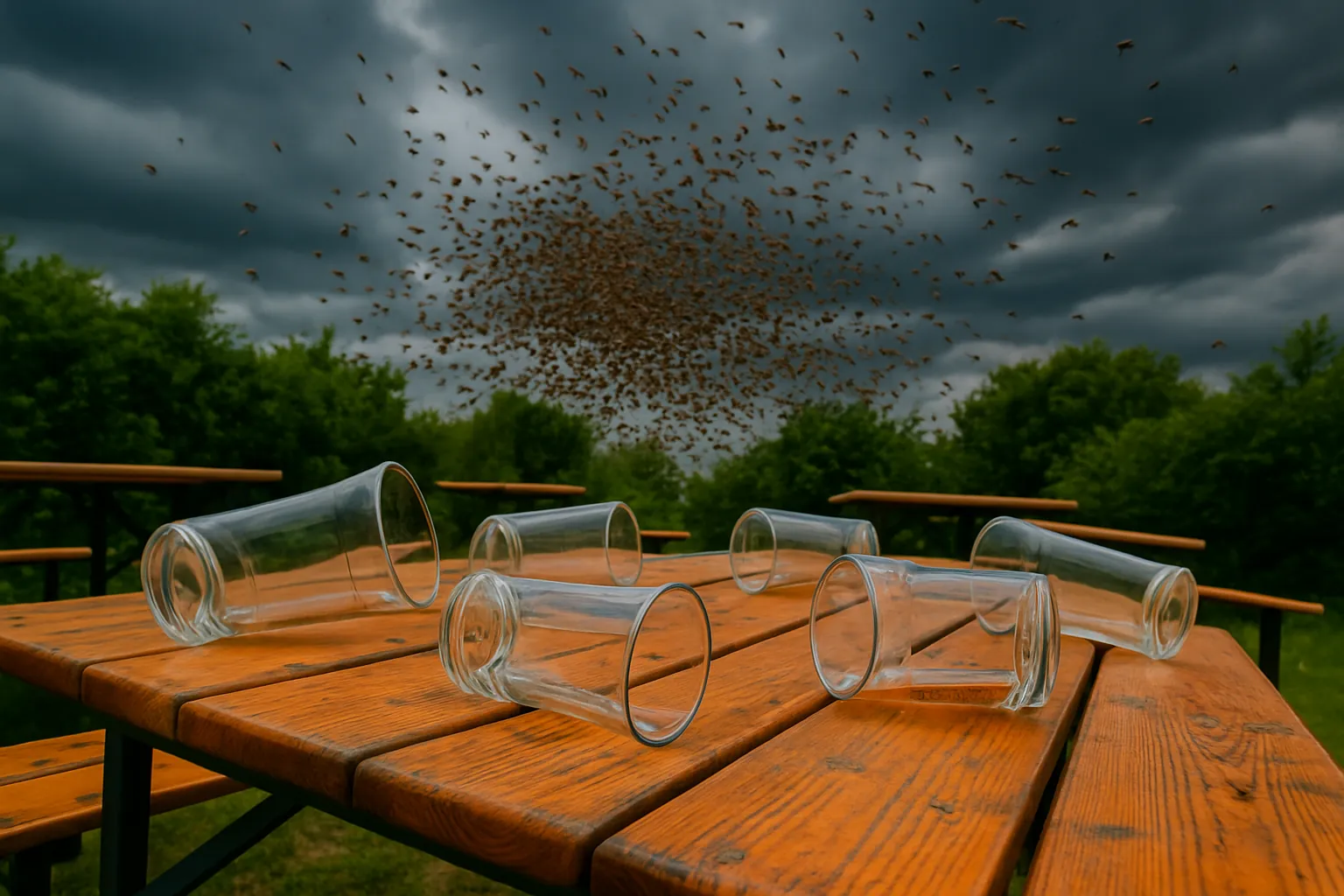
SHEFFIELD, U.K. — What began as an ordinary Tuesday pint turned into a rapid-fire evacuation and a town-wide reckoning over emergency readiness. Shortly after 4:00 p.m. on 22 April 2025, an estimated 3,000 honeybees swarmed the courtyard of The Queens Arms on London Road, overpowering patio lights and driving patrons into the street within seconds. No serious injuries were reported, yet the incident has jolted municipal leaders, public-health planners, and ordinary residents into asking a single, sobering question: Are we prepared for fast-moving biological events we barely understand?
Seconds of Chaos: How One Pub Became a Flashpoint
Witnesses describe a scene that felt cinematic in its speed and scope. “It was like the air turned to static,” recalled barback Lee Morton, still shaken. “You heard one buzz, then a roar. In ten seconds the patio was empty.” Security footage now circulating on social media shows umbrellas rattling in the downdraft of thousands of wings, pint glasses tipping, and families huddling behind parked cars. According to the Sheffield Fire & Rescue Service, on-site staff executed a manual evacuation in under 90 seconds—an outcome officials praise, yet call largely the result of luck.
Dr. Priya Alston, a local entomologist, confirmed the insects were Apis mellifera, the western honeybee. She stressed that spring swarming is natural, but acknowledged the swarm’s size “ranks at the extreme high end for urban settings.” A spokesperson for South Yorkshire Police added that the department had fielded 31 calls in six minutes, clogging non-emergency lines. “This was a live stress test for our call-handling capacity,” the spokesperson admitted.
Eyewitness clips—first reported by the Warwickshire World footage—have already amassed 2.4 million views, underscoring how quickly local disruptions can ripple globally. Among the viewers: City Councillor Marta Kline, who hours later scheduled an emergency briefing on biological hazard response. “We prepare for floods and fires,” Kline noted. “We now see we must prepare for pollinators as well.”
Biological Alarms and Environmental Red Flags
The swarm arrived little more than a month after Sheffield Beer Week, which drew record crowds and sugary beverage residue that experts say may have heightened the pub’s attraction to bees. Yet many scientists point to broader environmental triggers. Rising spring temperatures, erratic cold snaps, and habitat compression can all destabilize colony behavior, pushing bees to seek new nesting zones in densely populated districts.
Dr. Alston warns the episode is “not an isolated oddity” but part of a fragile ecological pattern. She references a 2023 incident in which a pub worker’s car was engulfed by hundreds of honeybees. “The frequency is inching upward,” she said. “That points to environmental stress.” Researchers at the University of Sheffield have since launched a rapid-assessment study on urban swarm dynamics, hoping to deliver preliminary findings to the council within 60 days.
Local businesses, meanwhile, are performing their own diagnostics. Several venues participating in the city’s popular “Pub Painting—Bumble Bee Edition” have started installing mesh screens and relocated outdoor waste bins in what one manager calls “a de-facto wildlife shield.”
Still, many residents remain rattled. “I’m not anti-bee,” said parent and community organiser Chloe Ramirez, “but I need a clear plan before I feel safe bringing my kids downtown.” Her concern is echoed by a newly formed coalition, Sheffield Citizens for Safe Outdoor Spaces, which has launched a petition calling for mandatory posting of bee swarm safety guidelines at all pubs with outdoor seating.
Mid-afternoon foot traffic is down 17 percent, according to preliminary data from the Sheffield Business Improvement District—a reminder that even a non-lethal biological event can exert measurable economic drag.
Race to Rewrite the Safety Playbook
The City Council’s Public Safety Committee will meet Friday to debate a three-point proposal:
- Rapid Response Protocol: A color-coded alert system that pushes notifications to phones within a 500-meter radius of any confirmed swarm.
- Training & Equipment: Grants for independent pubs to obtain bee-veils, smoke canisters, and basic first-aid supplies.
- Data-Driven Coordination: A shared dashboard integrating 999 calls, citizen reports, and university sensor feeds.
Acting Chief Fire Officer Simon Rees called the plan “ambitious but necessary,” predicting that biological incidents will rank among the city’s top five public-safety concerns within the decade. “Every drill we perform for chemical spills or gas leaks now needs a biological equivalent,” he added.
Industry groups appear split. The Sheffield Hospitality Alliance supports standardized guidance but worries about cost-sharing. “Margins are thin,” president Kayla Ward explained. “If the city mandates equipment, the city must subsidize it.” Meanwhile, the British Beekeepers Association—credited with safely removing the recent swarm—urges a measured response. “Bees are not an enemy,” spokesman Oliver Grant said in a press release. “Sound management protects people and pollinators.”
National media attention has intensified pressure. A New York Post report cast the scene as “something out of a horror film,” sparking debates on whether headlines amplify fear or spur action. Yet even critics concede that the conditions revealed weaknesses in the city’s emergency preparedness plan.
“We need an all-hazards mindset now,” argued Professor Dana Abbott, a crisis-management scholar at Hallam University. “From cyberattacks to swarming insects, non-traditional threats can paralyze a community if protocols lag behind reality.” Abbott recommends tabletop exercises pairing beekeepers with first responders—an unorthodox coalition she says could model resilience for cities nationwide.
Tips for Residents (Official Draft)
- Stay Calm, Seek Shelter: Move indoors, close windows, and wait 15 minutes before re-emerging.
- Avoid Agitation: Do not swipe or spray. Sudden movement increases stinging risk.
- Report, Don’t React: Use the council’s forthcoming BeeWatch app or dial 101 to log sightings.
As the committee drafts legislation, Councillor Kline insists the city must balance urgency with stewardship. “These creatures sustain our food systems,” she said, “but unmanaged, they can disrupt daily life. Our task is to build a response that honors both truths.”
The vote is expected next week. Until then, officials recommend businesses review evacuation plans, and residents keep antihistamines accessible—small steps, they say, toward forging a community ready for the next surprise carried on the spring wind.